


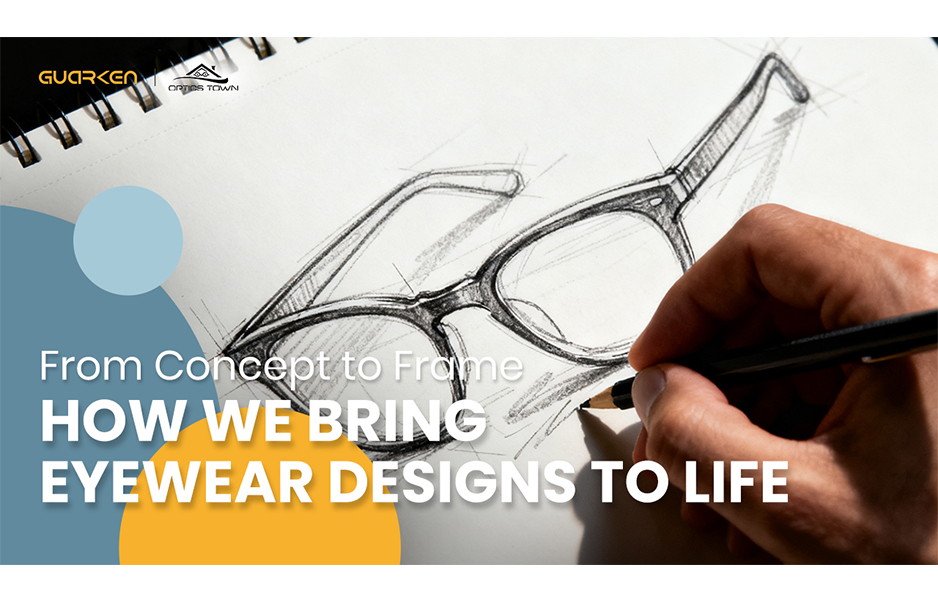
Turning creativity into craftsmanship — that’s the heart of what we do at Guarken.
From the first spark of inspiration to the final polish, every frame passes through
countless steps of design, engineering, and precision. In our latest blog, we walk
you through this journey — how ideas become tangible eyewear that tells a story.
Read the full piece below and see how design truly comes to life.
From Concept to Frame: How We Bring Eyewear Designs to Life
From being a simple instrument for vision correction, eyewear has developed into a statement piece that showcases sophisticated
craftsmanship and fashion. Every fashionable pair of glasses is the result of a painstaking process that blends creativity, accuracy,
and artistry. Transforming a concept into a tangible eyewear frame involves several stages, each requiring a blend of creativity
and technical expertise at Guarken. The process from the original concept to the finished product is examined here.
Conceptual Design and Sketching
Once the inspiration is defined, designers move to the conceptual design phase. At this stage, ideas take form on paper or digital
platforms. Freehand sketches capture the initial vision, showcasing shapes, materials, and potential color schemes. Advanced
design software often aids in creating detailed 2D and 3D models, allowing designers to visualize proportions and experiment with
various design elements.
Material Selection: The Backbone of Design
Choosing the right material is pivotal in eyewear design. Whether it’s acetate, metal, titanium, or sustainable alternatives like recycled
plastics, the material determines the frame’s durability, weight, and overall appeal. Designers and engineers collaborate to select materials
that meet functional requirements while maintaining the desired look and feel of the frame.
Prototyping: Bridging Concept and Reality
After finalizing the design, the next step is prototyping—bringing the virtual model into physical existence. Prototypes are usually created
using 3D printing or CNC (Computer Numerical Control) machining. This phase is crucial for assessing the frame’s ergonomics, fit,
and structural integrity. Multiple iterations may be required to refine the design, ensuring it meets both aesthetic and functional standards.
Precision Engineering and Tooling
Once the prototype is perfected, precision engineering takes center stage. This involves creating molds, dies, and other specialized tools needed
for mass production. For acetate frames, sheets of acetate are cut, shaped, and polished, while metal frames undergo processes such as
stamping, bending, and welding.
Quality Control: Ensuring Perfection
Frames are inspected for any defects in shape, color, or functionality. Tests are conducted to ensure durability, flexibility, and resistance to
environmental factors such as heat and moisture. This meticulous inspection at Guarken guarantees that every pair of glasses meets the
brand’s high standards and provides a comfortable and reliable experience for the wearer.
Adding the Finishing Touches
This includes applying colors, textures, or patterns through techniques like lamination, laser engraving, or electroplating. Branding elements
such as logos are also incorporated during this stage. These details enhance the frame’s visual appeal and distinguish it from competitors,
solidifying its identity in the marketplace.
Packaging and Distribution
Once the frames are complete, they are carefully packaged to ensure they remain pristine during transportation. Packaging often reflects the
brand’s image, combining functionality with aesthetic appeal. From there, the eyewear is distributed to retailers, opticians, or directly to
customers, ready to adorn faces around the world.
Conclusion
The journey from concept to frame is a testament to the incredible synergy between artistry and engineering. As the eyewear industry continues
to innovate and embrace sustainability, the future promises even more exciting developments in this intricate craft. Every pair of glasses tells
a story, and it is through this meticulous process that these stories come to life.

