


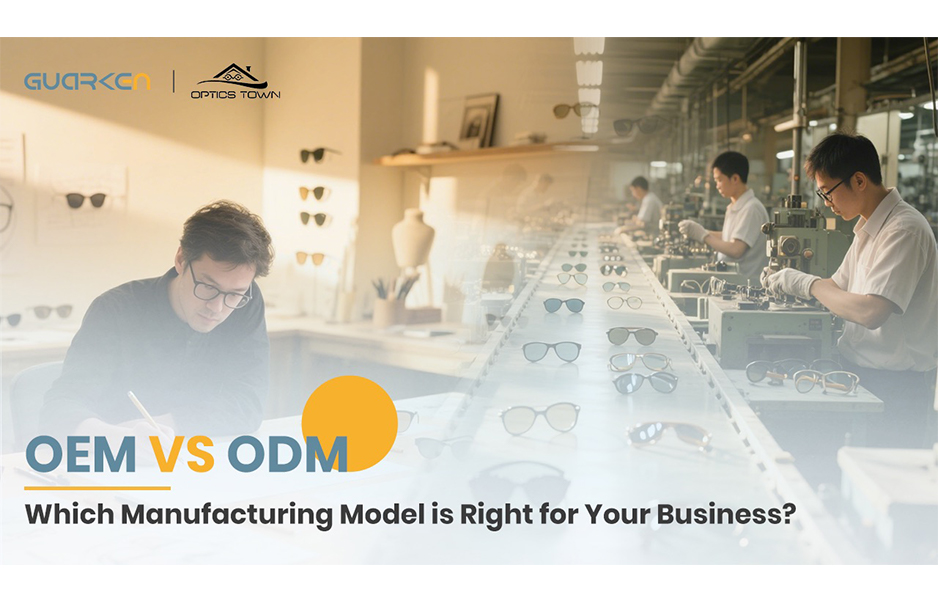
OEM or ODM — which model fits your brand vision?Whether you’re launching your first collection or expanding into new markets, how you manufacture matters.At Guarken, we support both OEM and ODM models — and even hybrid approaches — to help eyewear businesses stay agile, own their design identity, and deliver on quality. From bold color-blocked acetates to precision metal frames, your vision is safe in our hands.Our latest blog breaks down the pros and cons of OEM vs. ODM, and how to choose what works best for your goals.Read it now — and let’s talk about building something original together.
OEM vs ODM: Which Manufacturing Model is Right for Your Business?
When businesses look to expand their product lines or enter new markets, manufacturing is a critical consideration. Each model offers distinct advantages and challenges, making it essential for businesses to understand their differences and choose the one from Guarken that aligns best with their goals, resources, and market demands. This article explores OEM and ODM manufacturing models, their benefits, and how to determine which is right for your business.
Understanding OEM Manufacturing
OEM, or Original Equipment Manufacturing, refers to a model in which a company designs its product and works with a manufacturer to produce it according to specific requirements. The manufacturer provides the production capabilities, including facilities, workforce, and sometimes raw materials, but the design, branding, and intellectual property remain with the hiring company.
Exploring ODM Manufacturing
ODM, or Original Design Manufacturing, takes a different approach. In this model, the manufacturer provides pre-designed products that the hiring company can customize or brand.
Despite its benefits, ODM has limitations. Since the manufacturer owns the original design, businesses have less control over the product’s features and specifications. Customization options may be limited, and competitors might also use the same or similar designs, reducing the product’s uniqueness. Furthermore, reliance on the manufacturer’s intellectual property means switching suppliers can be more challenging.
Key Factors to Consider When Choosing Between OEM and ODM
Deciding between OEM and ODM requires a thorough assessment of your business’s needs, resources, and long-term goals. Several factors can influence your choice, including budget, time-to-market, control over design, and scalability.
For businesses with significant financial resources and a focus on innovation, OEM is often the preferred choice. The perfect product from Guarken allows for complete customization and differentiation, making it suitable for companies looking to establish a strong brand identity and offer unique products. However, this model requires a longer timeline and substantial investment in R&D and production planning.
Combining OEM and ODM Strategies
In some cases, businesses may find that a hybrid approach, combining elements of both OEM and ODM, is the best solution. Once the product gains traction, the business could transition to OEM to create a more customized and differentiated version.
Another scenario where a hybrid approach is beneficial is when a company wants to offer a diverse product portfolio. By using OEM for flagship products that require high levels of customization and ODM for complementary products, businesses can balance innovation with cost-efficiency.
Building Strong Partnerships with Manufacturers
Establishing clear agreements regarding intellectual property, confidentiality, and quality assurance is also important. For OEM partnerships, businesses must ensure that their designs are protected and that manufacturers comply with all specifications. For ODM partnerships, companies should negotiate customization options and exclusivity agreements to differentiate their products from competitors.
Conclusion
OEM offers unparalleled control and customization, making it ideal for companies focused on innovation and differentiation. Conversely, ODM provides a cost-effective and time-efficient solution for businesses looking to enter markets quickly or expand their product offerings. By understanding the strengths and limitations of each model and aligning them with your business goals, you can make an informed choice that sets your company up for success in a competitive marketplace.

